What Is Guest Posting and How Does It Help SEO?
Guest posting is one of the most widely used link building tactics in SEO. But what exactly is it, how does it work, and is it still effective in 2026?
This guide explains guest posting clearly — what it involves, why it matters for organic search performance, and how to approach it correctly.
What Is Guest Posting?
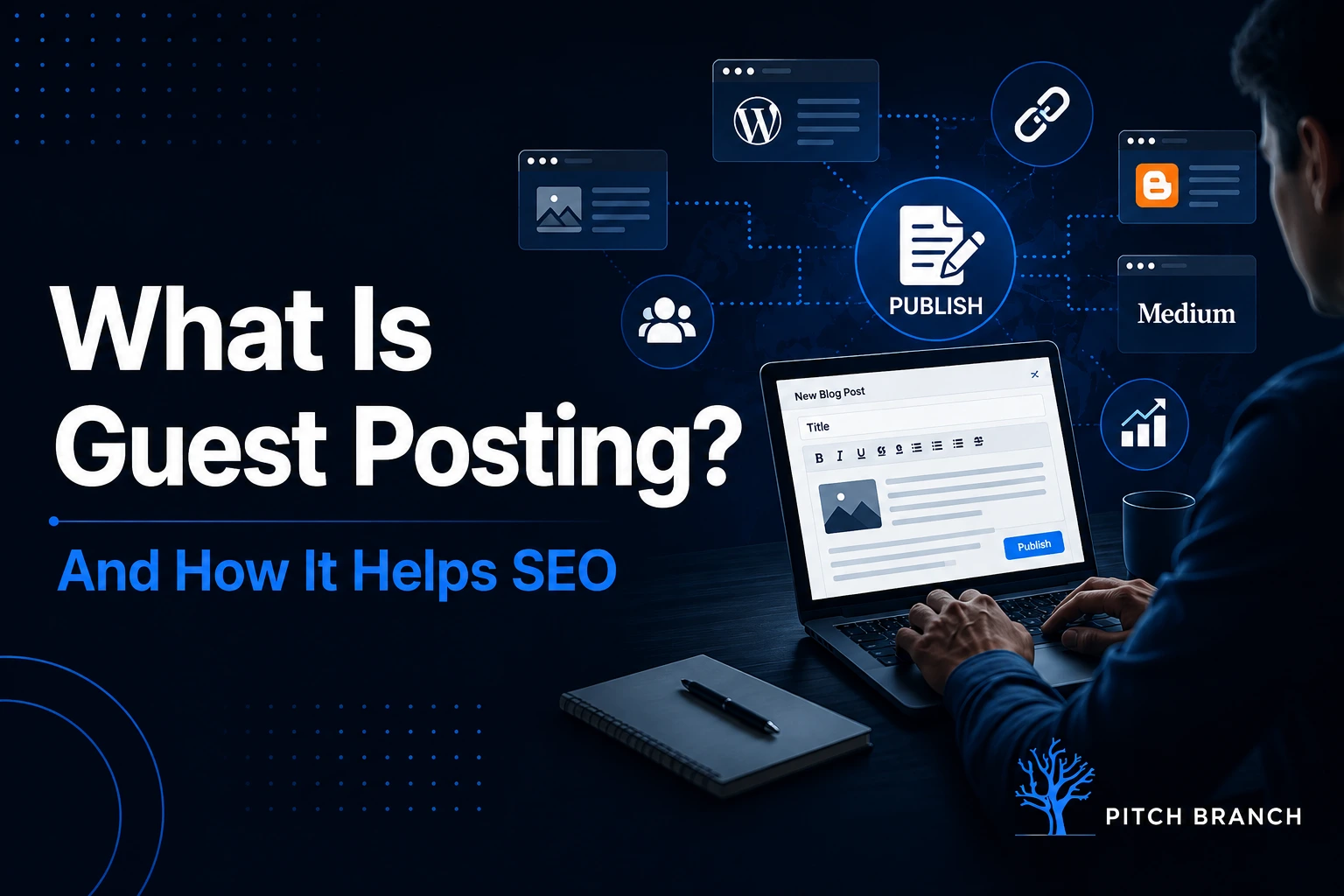
Guest posting — also called guest blogging — is the practice of writing and publishing an article on another website. In return, the article typically includes a backlink pointing to a page on your own website.
When done correctly, guest posting places your content on a real, independently operated website in your niche. The backlink within that content signals to Google that an independent editorial source considers your website worth referencing.
Over time, a consistent guest posting strategy builds your website’s referring domain profile — which is one of the strongest indicators of domain authority in Google’s ranking algorithm.
How Does Guest Posting Work?
A guest posting campaign typically follows a clear sequence of steps.
Publisher research. The first step is identifying relevant websites that publish content in your niche and accept contributions from outside writers. Not all websites are suitable — quality, relevance, and editorial standards all matter.
Outreach. Once suitable publishers are identified, the next step is reaching out to site editors or owners with a pitch. A good pitch proposes a specific article topic that fits the publication’s audience and explains why the content would be valuable for their readers.
Content creation. When a pitch is accepted, the article is written to the publisher’s editorial standards. The content should be genuinely useful to the site’s audience — not a thinly disguised promotional piece designed purely to host a backlink.
Publication and link placement. The article is published on the host website with your backlink included contextually — within the body of the article where it naturally adds value for the reader.
Reporting. The live URL is confirmed and the placement is recorded as part of the overall link building campaign.
Why Does Guest Posting Help SEO?
Guest posting supports SEO in several important ways.
It builds referring domains. Each guest post on a new website adds a referring domain to your backlink profile. Google uses the number and quality of referring domains as a key signal when determining how authoritative a website is in its niche.
It passes topical authority. A backlink from a website that covers the same subject matter as yours passes stronger topical relevance signals than a link from an unrelated site. Guest posting on niche-relevant publications directly supports your topical authority in Google’s eyes.
It supports keyword rankings. Strategic anchor text in guest post backlinks helps Google understand which keywords and topics your target pages are relevant to. A carefully planned anchor text distribution across multiple guest posts can support the ranking performance of your most important pages.
It increases brand visibility. Beyond the SEO benefits, guest posting places your brand in front of new audiences — readers of the host publication who may be interested in your products or services.
It drives referral traffic. A well-placed guest post on a publication with genuine readership can send direct referral traffic to your website — visitors who follow the link because they found the article useful.
What Makes a Good Guest Post?
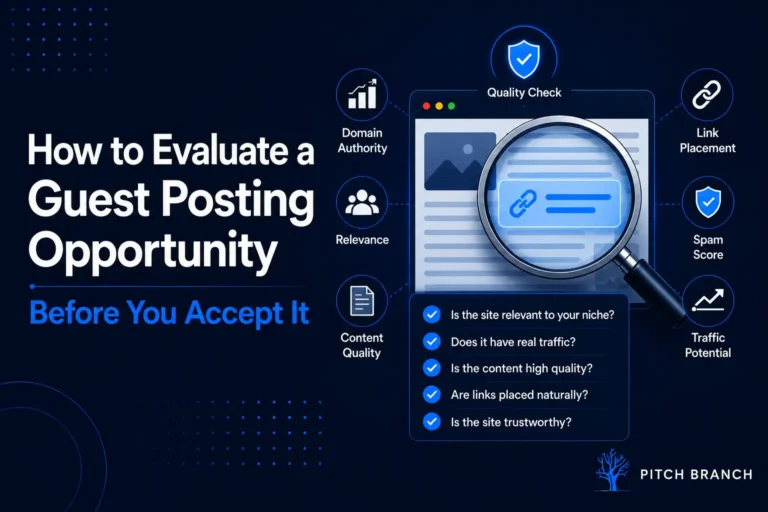
Not all guest posts deliver equal SEO value. The quality of the placement depends on several factors.
Publisher relevance. The host website should cover topics related to your niche. A backlink from a site in your industry passes stronger topical authority than a link from a general or unrelated website.
Publisher quality. The host website should have genuine organic traffic from search — not just a high domain rating score. A site with real readers and real search visibility is a more valuable editorial reference than a high-DR site with no genuine audience.
Editorial standards. The host website should have genuine content standards — publishing articles that are useful to their readers rather than accepting any content submitted for the purpose of link placement.
Link context. The backlink should appear naturally within the body of the article in a context that makes editorial sense. Links forced into unrelated paragraphs or placed in author bios carry less weight than contextual in-body placements.
Independence. The host website should be independently operated and not part of a link-selling network or private blog network. Links from sites that openly sell placements carry a higher risk of being discounted by Google’s quality systems.
Guest Posting vs Link Farms and PBNs
It is important to distinguish between legitimate guest posting and manipulative link schemes.
Legitimate guest posting involves placing genuine editorial content on real, independently operated websites — where the placement is accepted based on content quality and relevance to the publication’s audience.
Link farms and private blog networks (PBNs) involve placing links on sites that exist primarily to host backlinks — with no genuine audience, no editorial standards, and no real organic traffic. Google’s SpamBrain system is designed to identify and discount these placements.
The difference in approach produces very different outcomes. Editorial guest posts on real websites build lasting domain authority. Links from PBNs and link farms risk devaluation or manual penalties as Google’s quality signals improve.
How Many Guest Posts Do You Need Per Month?
There is no single answer — it depends on your niche, your current domain authority, and the competitiveness of your target keywords.
Most SEO professionals recommend a consistent monthly volume of quality placements rather than occasional bursts of activity. A steady flow of 4 to 8 editorial placements per month on relevant, quality websites builds a natural-looking backlink profile that compounds in authority over time.
Quality matters more than volume. A single editorial backlink from a highly relevant, well-trafficked publication in your niche delivers more SEO value than ten links from low-quality sites with no real audience.
Is Guest Posting Still Effective in 2026?
Yes. Guest posting remains one of the most effective link building tactics available — but the approach matters more than ever.
Google’s core updates and link spam policies have made it increasingly difficult to benefit from low-quality guest posting at scale. Sites that placed links on open-submission directories or low-quality networks have seen those links devalued or penalised.
At the same time, editorial guest posts on real, relevant websites with genuine audiences have continued to deliver strong SEO outcomes. The gap between high-quality and low-quality guest posting has widened with every algorithm update.
In 2026, effective guest posting focuses on relevance over volume, editorial quality over speed, and genuine publisher relationships over bulk outreach tools.
Final Thoughts
Guest posting is a proven link building tactic when approached correctly. The key is focusing on publisher relevance, editorial quality, and genuine content — rather than chasing volume or using shortcuts that violate Google’s guidelines.
A well-executed guest posting strategy builds a referring domain profile that supports long-term organic growth — and delivers value that compounds over time with every quality placement added.
If you want to learn more about how PitchBranch approaches guest posting, explore our guest posting services or get in touch with our team.