What Is Link Building and Why Does It Matter for SEO?
If you have spent any time researching SEO, you have probably come across one consistent message: backlinks matter. But what exactly is link building, and why do so many SEO professionals treat it as one of their highest priorities?
This guide explains what link building is, how it works, and why it remains one of the most important factors in organic search performance in 2026.
What Is Link Building?
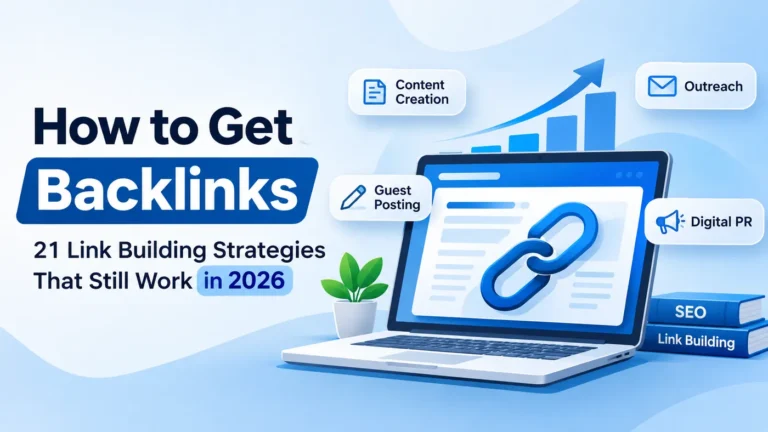
Link building is the process of earning backlinks from other websites to your own. A backlink is simply a link on one website that points to a page on another website.
When a relevant, authoritative website links to your content, Google reads that link as a signal of trust and credibility. It is essentially a vote of confidence from one site to another.
The more quality backlinks your website earns from relevant sources, the stronger your domain authority becomes. And the stronger your domain authority, the better your chances of ranking for competitive keywords in search results.
Why Do Backlinks Matter for SEO?
Google uses hundreds of signals to determine how to rank pages in search results. Backlinks have been one of the most important ranking signals since Google launched its original PageRank algorithm — and they remain critical today.
Here is why backlinks continue to matter for SEO.
They signal authority. A backlink from a trusted, established website tells Google that your content is worth referencing. Sites with more quality backlinks from relevant sources consistently rank higher than sites with fewer referring domains.
They signal relevance. A backlink from a website in your niche passes stronger topical authority than a link from an unrelated site. Topical relevance matters as much as the number of links you earn.
They help Google discover your pages. Google uses links to crawl the web. When a site links to your page, Google can follow that link and discover your content more quickly — which supports faster indexing.
They drive referral traffic. Beyond SEO, a backlink on a relevant site can send real visitors to your website — people who are already interested in your topic or industry.
What Makes a Good Backlink?
Not all backlinks are equal. A link from a high-quality, relevant website in your niche is far more valuable than a link from an unrelated or low-quality site.
Here are the key qualities that make a backlink genuinely useful for SEO.
Relevance. The linking site covers topics related to your niche and serves an audience similar to yours.
Authority. The linking site has genuine organic traffic, a real readership, and established editorial credibility.
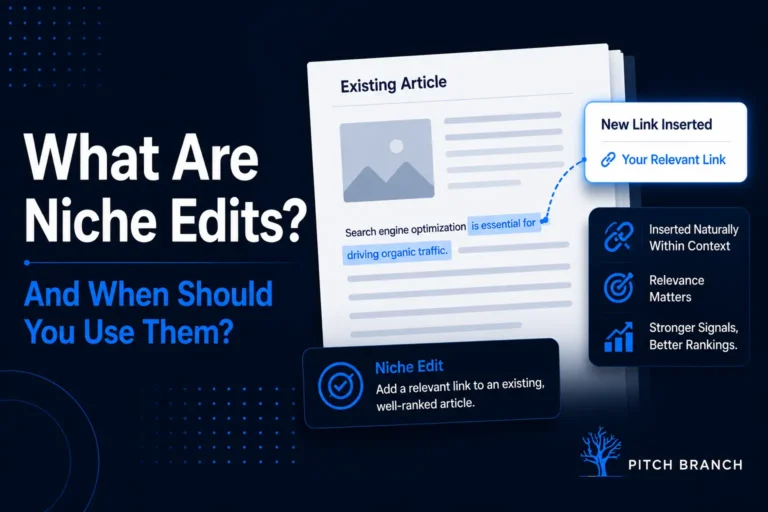
Context. The link appears naturally within editorial content — not forced into an unrelated paragraph.
Placement. The link sits within the body of an article, not in a footer, sidebar, or author bio.
Editorial quality. The link was earned through content merit and personalised outreach — not purchased through a link scheme.
Good Link Building vs Bad Link Building
Good link building focuses on earning links from real, independently operated websites through genuine content and personalised outreach. The goal is to build a backlink profile that reflects genuine editorial recognition from relevant sources.
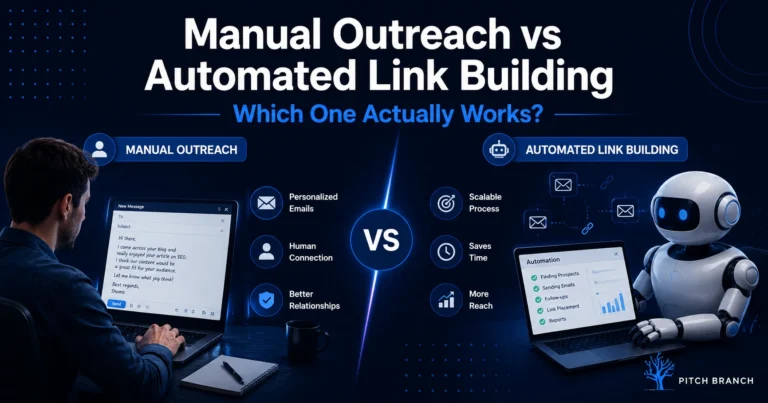
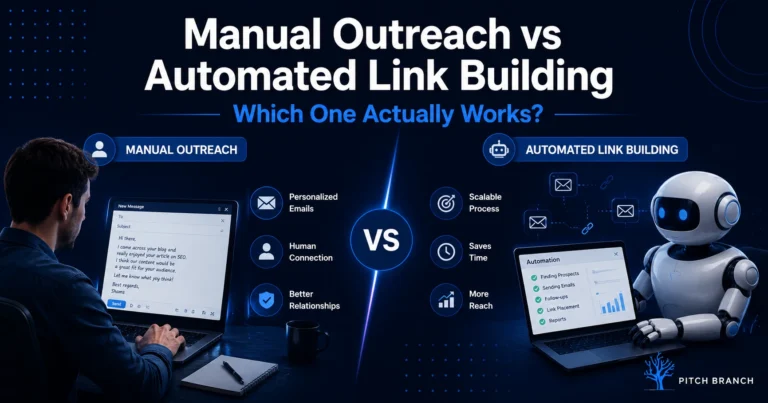
Bad link building relies on shortcuts that violate Google’s Webmaster Guidelines. Common examples include private blog networks (PBNs), link farms, bulk automated outreach tools, paid link schemes, and low-quality directory submissions.
Google’s algorithms — including the SpamBrain system — are designed to identify and discount manipulative link building. Sites that rely on low-quality or artificial links risk losing rankings or receiving a manual penalty.
The safest and most effective approach is earning editorial backlinks from relevant websites through legitimate outreach and quality content.
How Does Link Building Work in Practice?
A professional link building campaign follows a clear process from start to finish.
Research. Identify the pages on your website that you want to strengthen — usually your most important commercial or informational pages. Understand your current backlink profile and the gap between your site and the top-ranking competitors in your niche.
Publisher prospecting. Find relevant websites that could naturally reference your content. Evaluate each site based on topical relevance, organic traffic, editorial standards, and independence from link-selling networks.
Outreach. Contact site editors or owners with a personalised pitch that explains why a link to your content would be useful for their specific audience. Generic bulk outreach rarely produces editorial-quality placements.
Content and placement. Create or coordinate content that earns the placement. The best backlinks appear inside editorial articles where they genuinely add value for the reader — not in forced or unnatural positions.
Reporting. Track your placements, monitor your referring domain growth, record anchor text distribution, and refine your strategy based on what is working.
How Long Does Link Building Take to Show Results?
Link building is a long-term investment, not a quick fix. Most websites begin to see measurable improvements in domain authority within 4 to 8 weeks of consistent placements going live.
Keyword ranking improvements typically become visible within 2 to 4 months, depending on the competitiveness of your niche, the quality of your placements, and the overall strength of your on-page SEO.
The compound effect of link building means results grow over time. Each new referring domain adds to the authority of your entire domain — not just the individual pages receiving links. A backlink placed today continues to pass authority for years.
Is Link Building Still Worth It in 2026?
Yes. Despite years of changes to Google’s algorithm, backlinks remain one of the top three ranking signals. The key difference today is that quality and relevance matter far more than volume.
Google’s SpamBrain system and regular core updates have made it increasingly difficult to rank using low-quality or manipulative link building tactics. At the same time, websites with strong editorial backlink profiles have consistently held or improved their rankings after each major update.
In 2026, the most effective link building focuses on relevant editorial placements from real websites, manual personalised outreach, consistent and measured link acquisition over time, and topical relevance rather than vanity metrics like domain rating alone.
Final Thoughts
Link building remains one of the most impactful investments you can make in your website’s long-term organic performance. But the approach makes all the difference.
Chasing backlinks purely for the numbers — without considering relevance, editorial quality, or audience fit — produces short-term metrics and long-term problems.
Building a backlink profile based on genuine editorial placements from relevant, independently operated websites is the approach that holds up after every algorithm update and continues to deliver value over time.
If you want to learn more about how PitchBranch approaches link building, explore our link building services or get in touch with our team.